



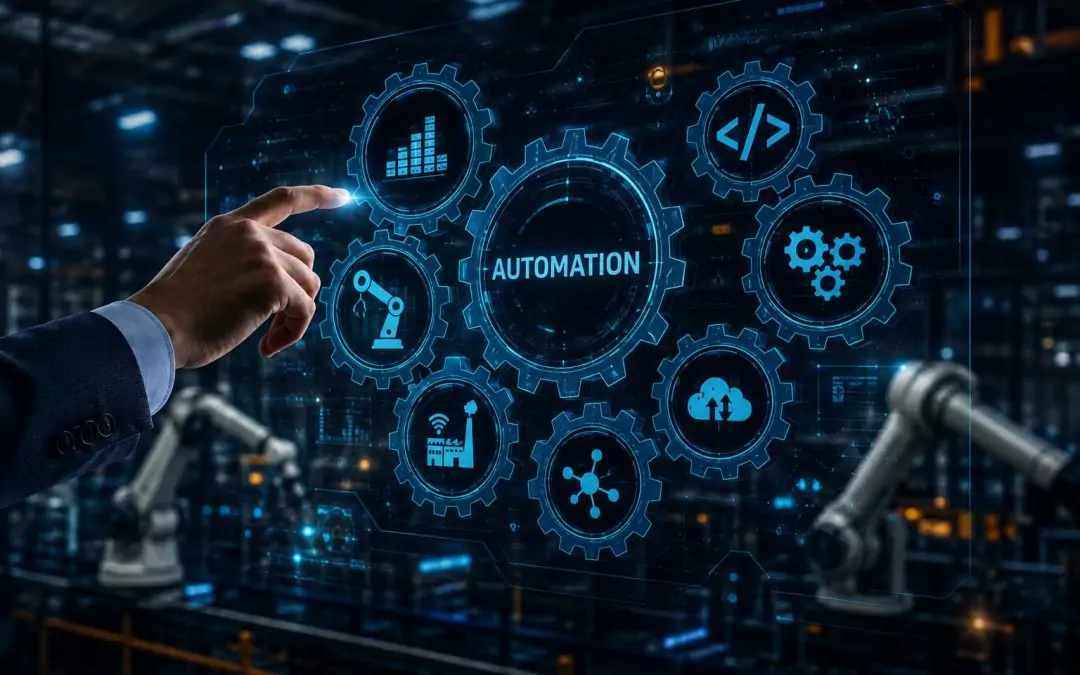
The technology sector has always been a primary engine of disruption, but it is currently experiencing an internal revolution driven by the very innovations it created. Automation is no longer confined to mechanical assembly lines or simple scripting tasks. It has evolved into a sophisticated layer of cognitive and operational intelligence that fundamentally reshapes how software is built, how networks are secured, and how digital businesses scale.
As organizations grapple with unprecedented volumes of data and a chronic shortage of specialized talent, automation has shifted from a cost-saving luxury to an operational necessity. This structural transition is redefining professional roles, optimizing complex infrastructures, and altering the velocity at which new technologies reach the global market.
Accelerating the Software Development Lifecycle
Traditionally, software engineering was a labor-intensive craft characterized by lengthy, manual cycles of drafting code, compiling programs, and running isolated tests. This model frequently created severe operational bottlenecks, as human error during configuration or testing could delay product rollouts by weeks or months.
Modern development environments rely heavily on continuous integration and continuous deployment pipelines. This architectural framework automates the entire journey of a piece of code from the engineer’s workstation to the live production server, eliminating a massive amount of friction in the process.
Redefining Quality Assurance and Code Creation
-
Automated code generation: Integrated development environments now feature predictive engines that can write repetitive boilerplate code, suggest optimized syntax, and identify structural flaws in real time as an engineer types.
-
Continuous testing matrices: Automated test suites run thousands of simulated edge cases within minutes of a code submission, catching memory leaks and security vulnerabilities long before human quality assurance engineers could inspect the system.
-
Frictionless rollback protocols: If a newly deployed software update encounters a critical error in the wild, automated monitoring tools instantly detect the anomaly and revert the system to a stable, previous version without manual intervention.
Revolutionizing Cyber Defense and Threat Intelligence
The sheer velocity and volume of modern cyberattacks have made purely manual defense strategies obsolete. Threat actors utilize automated scanners to probe corporate networks for vulnerabilities millions of times per day. For a human security analyst, sifting through the resulting ocean of system alerts to identify a genuine breach is like looking for a needle in a haystack.
To counter this, the cybersecurity sector has pioneered Security Orchestration, Automation, and Response systems. These platforms act as digital immune networks, processing vast streams of telemetry data and reacting to hostile actions at microsecond speeds that human operators cannot match.
Proactive Mitigation and Dynamic Containment
-
Automated incident isolation: When an unauthorized intrusion is detected on a company laptop or cloud server, the automation platform can instantly quarantine the compromised device from the rest of the network, preventing the lateral spread of malware.
-
Vulnerability patch deployment: Security software can automatically scan an enterprise infrastructure for newly disclosed software bugs, download the appropriate security patch, and test it in an isolated environment before pushing it across the company network.
-
Dynamic threat hunting: Automated systems continuously analyze normal baseline user behaviors, instantly flagging and investigating subtle deviations that might indicate a sophisticated, slow-moving insider threat or credential theft.
Optimizing Cloud Infrastructure and Distributed Systems
The shift toward cloud computing has created massive, distributed architectures that are too complex for human teams to manage manually. A modern enterprise application may rely on thousands of virtual servers, databases, and microservices scattered across multiple global data centers.
Managing these environments by hand leads to immense financial waste through over-provisioning or catastrophic downtime through under-provisioning. Cloud automation addresses this challenge by treating digital infrastructure purely as code, allowing software algorithms to dynamically manage physical and virtual hardware resources.
The Impact of Intelligent Orchestration
-
Elastic auto-scaling: Automated load balancers constantly monitor web traffic. If an e-commerce application experiences a sudden surge in traffic, the system instantly spins up new virtual servers to handle the load, and safely dismantles them when traffic subsides to minimize costs.
-
Self-healing architectures: When a cloud database or application container crashes, automated infrastructure managers detect the failure within seconds, terminate the broken instance, and deploy a fresh, identical copy without causing any disruption to the end user.
-
Automated cost optimization: Cloud management tools continuously scan corporate digital footprints to identify idle resources, automatically downgrading oversized storage tiers and terminating abandoned projects to enforce strict financial efficiency.
Democratizing Technology with Low-Code and No-Code Platforms
Historically, building a functional software application or automating a business workflow required years of formal computer science training and mastery of complex programming languages. This created a profound digital divide, separating the individuals who understood operational business problems from the engineers who possessed the technical capability to build solutions.
The rise of automated low-code and no-code development platforms has fundamentally democratized the tech landscape. These systems utilize visual interfaces and automated drag-and-drop mechanics to abstract away the underlying code, allowing non-technical professionals to construct sophisticated digital tools.
Empowerting the Citizen Developer
-
Workflow automation: Business analysts can use visual builders to map out complex logic flows, automatically connecting disjointed applications like customer relationship software, email marketing engines, and financial ledgers.
-
Rapid prototyping: Entrepreneurs can validate product concepts by visually designing mobile apps and web portals, relying on the platform’s automated backend to generate the database architecture and security parameters natively.
-
Bridging the talent gap: By enabling business units to solve their own minor software problems through automated builders, enterprise information technology departments are freed up to focus on high-stakes, core engineering initiatives.
Frequently Asked Questions
What is the difference between Robotic Process Automation and cognitive automation in the tech sector?
Robotic Process Automation excels at executing highly rigid, repetitive, rule-based tasks that require zero subjective judgment, such as copying data from a spreadsheet into an invoice template. Cognitive automation, conversely, incorporates advanced machine learning algorithms capable of processing unstructured data, recognizing subtle patterns, and making probabilistic decisions when faced with ambiguous or incomplete information.
How does the implementation of IT automation affect technical debt within legacy enterprise systems?
Automation can cut both ways regarding technical debt. When deployed correctly, automated refactoring tools and continuous testing pipelines systematically identify and fix archaic code structures, significantly reducing technical debt. However, if an organization automates a poorly designed, inefficient process without fixing the underlying architectural flaws, they effectively institutionalize and accelerate their technical debt.
What role does automated observability play in modern microservices architectures?
In complex microservices architectures, components interact in fluid, unpredictable ways that traditional logging systems cannot track. Automated observability tools continuously trace requests as they travel across thousands of independent services, automatically mapping dependencies, diagnosing hidden latency bottlenecks, and alerting engineers to the precise root cause of a system slowdown before it impacts users.
How are edge computing networks utilizing automation to handle massive data processing?
Edge computing pushes data processing away from centralized cloud servers and closer to physical devices like factory sensors or smart vehicles. Because bandwidth to transmission towers can be inconsistent, edge networks rely on local automation to filter, aggregate, and analyze data on-site, transmitting only critical anomalies or compressed summaries back to the cloud while maintaining standalone operation during network drops.
In what ways does infrastructure as code change the daily responsibilities of a systems administrator?
Infrastructure as Code transitions the role of a systems administrator from a manual hardware and software configurator to a software engineer who writes declarative code files. Instead of manually clicking through server dashboards or running terminal commands on individual machines, administrators write scripts that define the desired state of the entire network, allowing automation tools to deploy and manage the hardware predictably.
How does hyperautomation differ from standard business process automation?
Business process automation focuses on streamlining a single, isolated workflow within a department. Hyperautomation is an enterprise-wide strategy that involves identifying every single repeatable business process and automating it using a combination of tools, including machine learning, process mining, low-code platforms, and robotic process automation, effectively creating a fully integrated, self-optimizing corporate infrastructure.
What is dark NOC operation, and how close is the tech industry to achieving it?
A dark Network Operations Center is an enterprise infrastructure command facility that runs completely autonomously, requiring no human staff on-site to monitor network performance or handle security events. While the tech industry has achieved near-total dark operation for routine tasks like server provisioning and minor troubleshooting, true dark operations still require human engineers on standby to handle unprecedented black swan architectural failures and highly sophisticated, creative cyberattacks.