



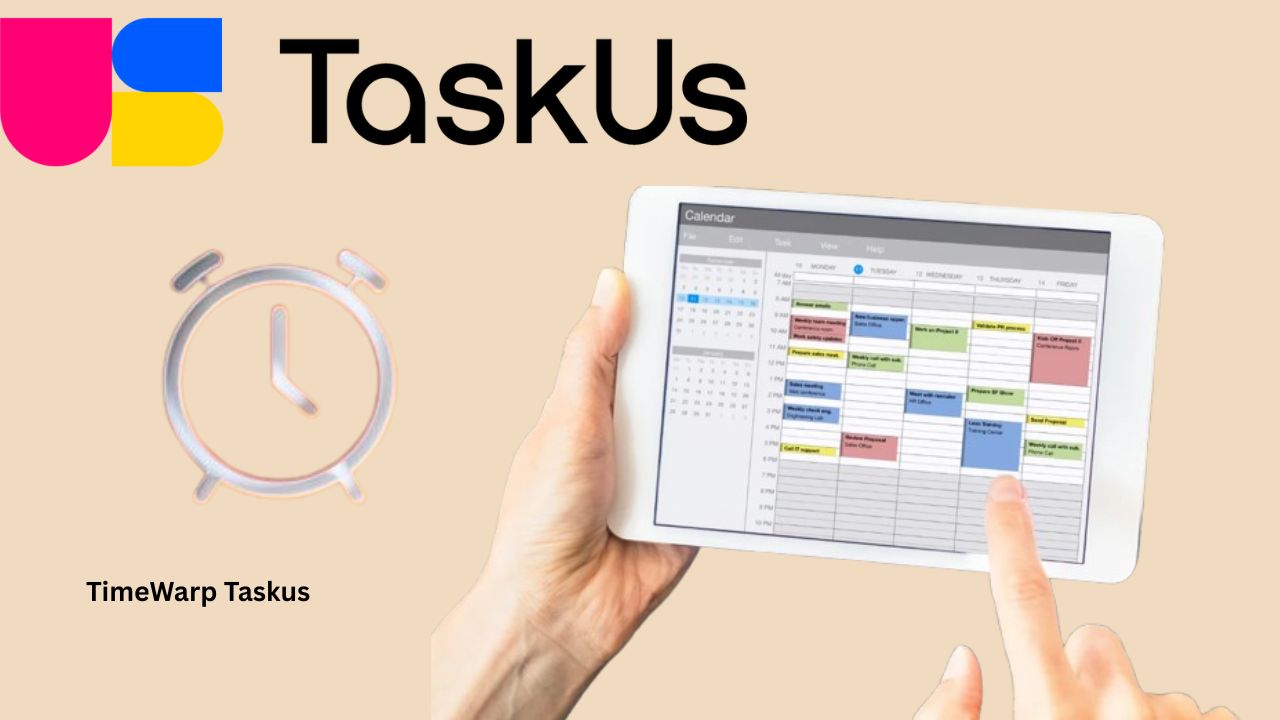
If you work with TaskUs, you’ve likely heard teammates talk about timewarp taskus for clocking in, managing schedules, and keeping pay-impacting records accurate. This guide distills what practitioners and internal-facing sources consistently describe: Timewarp is an internal timekeeping and workforce-management platform that helps teammates log time, request corrections, manage breaks and leaves, and gives team leaders the controls to review and approve records against KPIs and SLAs. In other words, timewarp taskus is the backbone of reliable attendance and payroll data at scale.
What Is Timewarp TaskUs?
Timewarp TaskUs is an internal platform used by teammates and team leaders to:
- Clock in/out and record work hours
- Track paid and unpaid breaks
- Manage overtime in line with account policies
- View schedules, swap shifts (where enabled), and request time off
- Submit time corrections (“edits”) for leader approval
- Provide managers with dashboards and audit trails
It sits behind secure single sign-on (SSO) with multi-factor authentication, aligning with the company’s enterprise identity standards. For teammates, that means your identity and device setup matter as much as your schedule awareness. For operations, it means cleaner audits, fewer payroll disputes, and better SLA adherence—all powered by timewarp taskus.
Why Timewarp Exists (and Why It Matters)
A global, 24/7 operation needs dependable time data
TaskUs operates across multiple countries and time zones. Timewarp taskus provides a single source of truth for attendance and schedule data, ensuring hours, breaks, and overtime are consistently tracked and reported.
Compliance, payroll accuracy, and client trust
Client contracts and local labor laws depend on accurate records. Timewarp’s logs and approval workflows help minimize disputes and provide the evidentiary trail required for audits, payroll reconciliation, and KPI reviews.
Better teammate experience
When timewarp taskus is used correctly, teammates see their hours, can submit edits when mistakes happen, and get transparent visibility into their schedules and paid time off—reducing anxiety around pay and attendance metrics.
Core Features You’ll Actually Use
1) Clock-In/Clock-Out and Break Tracking
- Start and end your shift with precise timestamps
- Record paid/unpaid breaks as account rules require
- See running totals (e.g., daily/weekly hours)
2) Time Edits and Correction Requests
- If you missed a clock or something looks wrong, submit an edit
- Add a clear reason and attach evidence when applicable
- Track the approval status in timewarp taskus so you aren’t guessing
3) Scheduling and Shift Management
- View assigned shifts in your local timezone
- Request swaps or changes where the account allows
- See blackout dates and public holidays configured by operations
4) Leave and PTO Requests
- Request PTO with lead times defined by policy
- See balances (where integrated) and track approval status
5) Overtime and Threshold Controls
- Understand when overtime begins for your account
- View consumption against weekly/monthly limits
- Ensure overtime requests follow the documented approval path
6) Leader Dashboards and Reports
- Team leaders (TLs) review pendings, approve/deny edits, and monitor compliance
- Export or view reports by teammate, queue, or date range
- Spot patterns early (e.g., frequent late clocks or repeated edit types)
7) Secure Access and Audit Trails
- SSO with multi-factor authentication protects access
- Role-based permissions ensure teammates see only what they need
- Audit history supports investigations and compliance checks
How Timewarp TaskUs Works, End-to-End
Step 1: Sign-In and Verification
- Sign in with your TaskUs credentials using the company’s SSO flow
- Complete multi-factor authentication on your enrolled device
- If your phone or authenticator app changes, update your MFA before your next shift
Step 2: Start of Shift
- Clock in at the start of your schedule (not before permissible time windows)
- Confirm your queue or assignment if your account requires it
- Check any schedule notes for the day (e.g., meeting blocks, training, or QA)
Step 3: Breaks and Compliance
- Use timewarp taskus to start/end breaks according to account policy
- Keep breaks within allowable lengths to prevent automatic exceptions
- If you forget, log the correction quickly and notify your TL
Step 4: End of Shift and Review
- Clock out at shift end and verify the totals
- File any necessary time edits while details are fresh
- For complex shifts (split shifts, extended outages), add notes to help approvers
Step 5: Manager Review and Approvals
- TLs review pending edits daily
- Approvals update the master timesheet and tie back to payroll and reporting
- Exceptions may trigger coaching, retraining, or policy reminders
Best Practices for Teammates
Set up your access before Day 1
- Enroll your primary and backup MFA methods
- Test sign-in on your work device and network
- Keep your authenticator available when entering secure floors or facilities
Build a personal timekeeping routine
- Open timewarp taskus five minutes before shift start to avoid rushing
- Log breaks the moment you start them; same when you end
- Double-check totals before leaving for the day
Make approvals easy
- When submitting an edit, be specific: time, reason, and context
- Attach supporting details where allowed (e.g., network outage note)
- Avoid bulk edits; timeliness helps approvers verify fast
Know the policy for your account
- Overtime triggers, grace periods, meal break rules, and outage handling vary
- Keep a quick reference in your notes so you always log correctly
Best Practices for Team Leaders and Workforce Roles
Approve daily, not weekly
- Same-day approvals reduce payroll surprises and escalations
- Use dashboards to prioritize edits that affect pay periods closing soon
Watch the signals
- Repeated late clocks, missed breaks, or identical edit reasons suggest a coaching need
- Look for patterns tied to device issues (e.g., MFA failures) and escalate to support, not HR
Align with WFM and HR
- If timewarp taskus shows consistent over- or under-staffing, sync with WFM for schedule redesign
- Validate PTO and holiday calendars match local policy and client SLAs
Troubleshooting & Support Pathways
Can’t sign in?
- Confirm network, VPN (if required), and your MFA device availability
- If your phone changed or was wiped, re-enroll MFA through the official path
- If account lockouts or password resets are in play, follow the “trouble signing on” prompts
Missing clock or wrong totals?
- File a time edit immediately in timewarp taskus
- Add a concise explanation (e.g., power outage, building access delay)
- Notify your TL only if your account requires a heads-up message
System looks fine but your pay stub doesn’t
- Compare the pay period with your approved time entries
- If an edit didn’t post before payroll cutoff, ask your TL about off-cycle corrections
- Keep your submission timestamps; they help payroll triage
Data Security in Timewarp TaskUs
Timewarp taskus uses enterprise SSO and multi-factor authentication to ensure only verified teammates access sensitive timekeeping and scheduling data. Roles restrict what each user can view or modify, while audit logs record changes and approvals. Practically, this means you must keep your MFA enrollment current, follow device policies, and avoid sharing credentials—ever.
Frequently Overlooked Features (That Save You Time)
- Shift swap workflows: If enabled for your account, these keep changes documented and approved without side chats.
- Holiday and blackout calendars: Reduce back-and-forth when planning PTO.
- Edit reason templates: Speed up corrections and help TLs approve faster.
- Notifications and reminders: Use them to avoid missing breaks or clocks on complex rosters.
- Role-based views: Leaders can filter by queue, site, or program for faster reconciliation.
The Business Case: Benefits by Role
For teammates
- Fewer paycheck surprises
- Clear visibility into schedules and balances
- A documented path to fix mistakes (without guesswork)
For TLs and operations
- Faster approvals and cleaner period closeouts
- Actionable signals on schedule design and coaching needs
- Stronger audit readiness for clients and regulators
For HR, Payroll, and Compliance
- Consistent records across sites and time zones
- Reduced manual rework and fewer disputes
- Transparent, reportable workflows that stand up in audits
Common Myths and Clarifications
- “Is timewarp taskus a public app I can download?”
No. It’s an internal platform behind TaskUs SSO. If you’re not a teammate or approved user, you won’t be able to access it. - “Is it just a Chrome extension?”
Some third-party blogs frame it that way, but the authoritative flow is secure web access via SSO/MFA. Treat any “public install” instructions with caution unless shared by official channels. - “Does it replace HR or payroll systems?”
No. Timewarp taskus complements those systems by keeping time data accurate and approved—so downstream HR and payroll stay clean. - “Can leaders edit my time without me knowing?”
Edits follow workflow and audit trails. You should see final approved entries reflected in your timesheet.
Getting Ready for Day One with Timewarp TaskUs
- Complete MFA enrollment on your approved device(s).
- Test SSO access from your work environment a day early if possible.
- Bookmark your timekeeping portal and sign in five minutes before shift.
- Review your schedule and any program-specific timekeeping rules.
- Log accurately from the first clock. Small habits prevent big fixes later.
Conclusion
When used consistently, timewarp taskus reduces friction for everyone: teammates get transparent time and pay, leaders approve faster with better context, and back-office teams enjoy cleaner, auditable data. Start with reliable sign-in, build a simple pre-shift routine, and treat edits like mini-tickets with clear reasons. That’s how timekeeping moves from a chore to a strength.
FAQ: Timewarp TaskUs
1) Is timewarp taskus available to contractors as well as full-time teammates?
Access is role-based. Contractors may use it when their engagement and program policies require. Your onboarding packet should specify whether you’ll log time in timewarp taskus or in a client-mandated system.
2) How fast are time edits approved?
Approvals depend on program volume and TL workload. Best practice is daily review. Submit edits promptly with clear reasons and, if allowed, supporting context—this speeds decisions.
3) What if my MFA device is unavailable at shift start?
Use your backup method if you enrolled one. If not, follow the official reset path as documented by internal IT. Avoid ad-hoc workarounds; they can delay access and create compliance issues.
4) Can I see my overtime totals in real time?
Most programs expose running totals or flags as you approach overtime thresholds. If you don’t see them, ask your TL where to view OT consumption for your account.
5) Do approved edits immediately reflect in payroll?
If the approval lands before the payroll cutoff, it should flow through automatically. Late approvals may require manual adjustments; your TL or payroll partner can advise on timing.
6) What should I do if a system outage prevents me from clocking?
Follow your program’s outage protocol (often: notify TL, collect evidence, submit an edit once systems are back). Document as soon as possible to keep the audit trail intact.
7) How do shift swaps work in timewarp taskus?
Where enabled, submit a swap request with your proposed partner and new times. The system routes it for approval, then updates both schedules once approved.